
Lead UX Designer | interactive investor | 2026
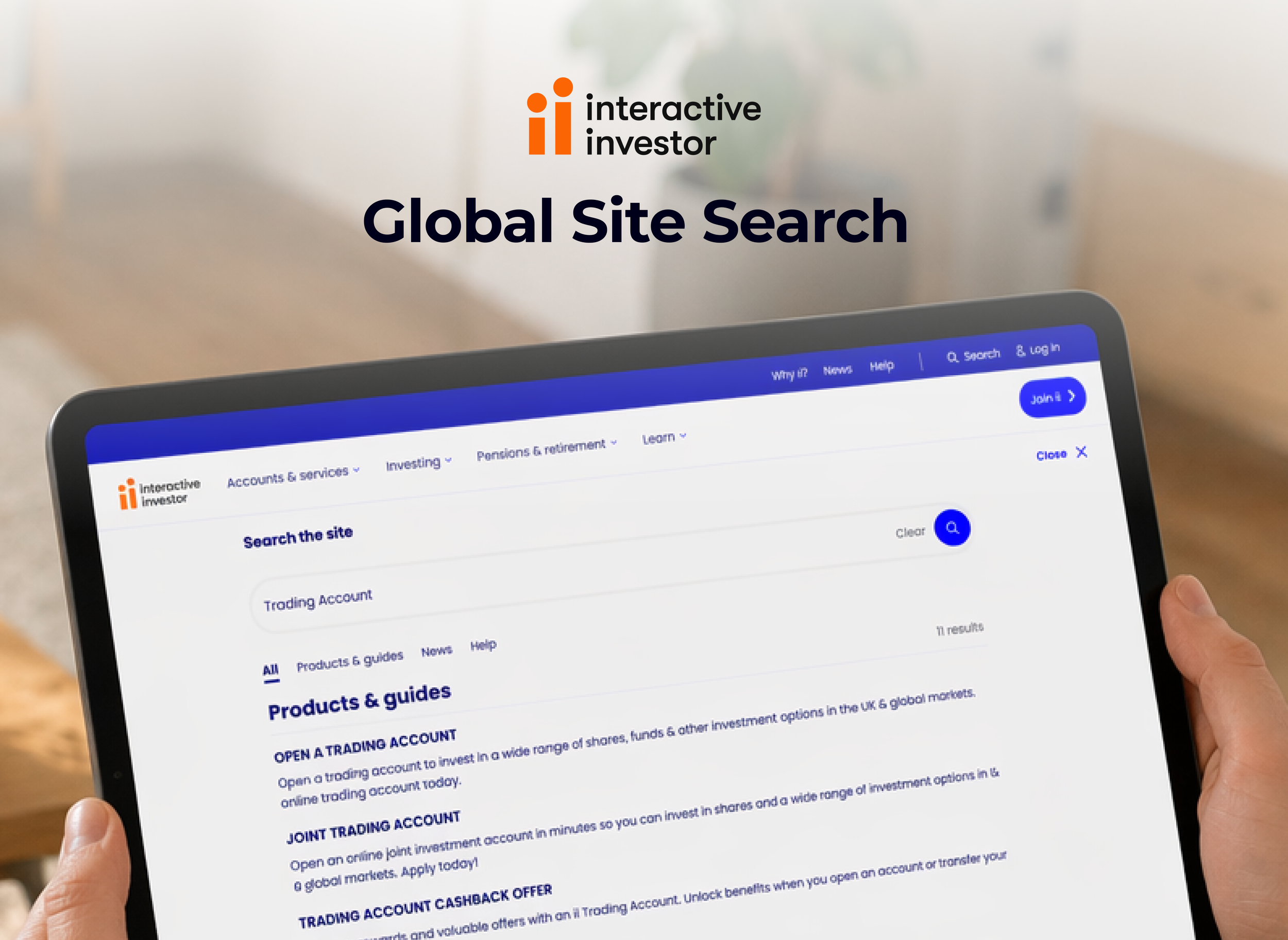
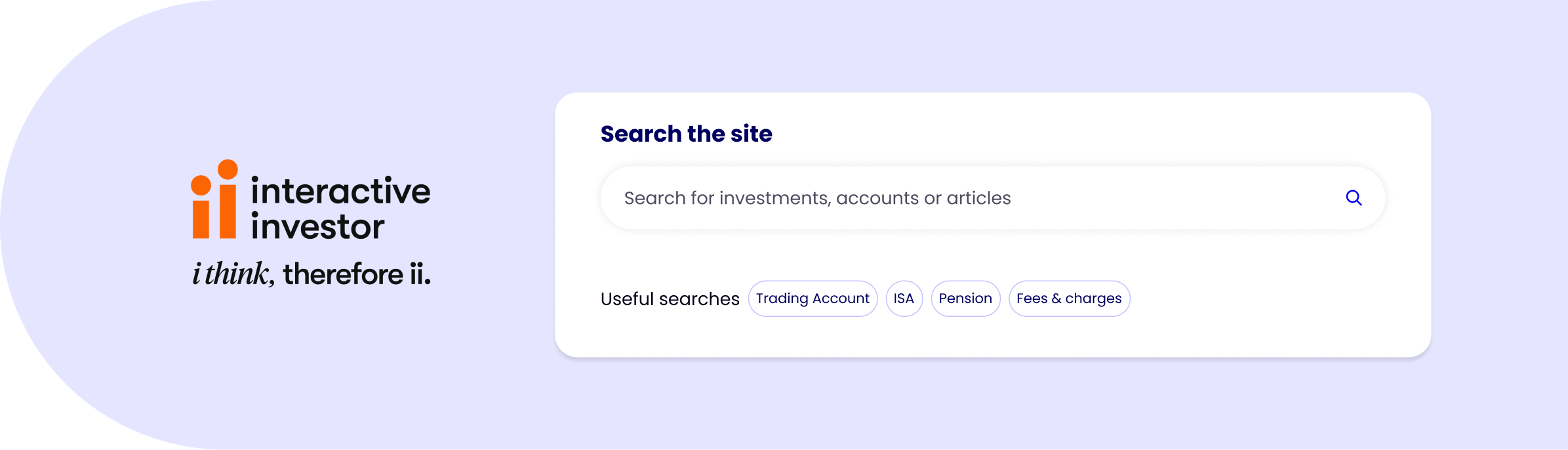
Global Site Search Redesign
Transforming search from a broken utility into a core navigation tool
Problem
Users expected to use the search to navigate the platform, but the existing experience was limited, inconsistent, and failed to return relevant results—driving frustration and support dependency.
Solution
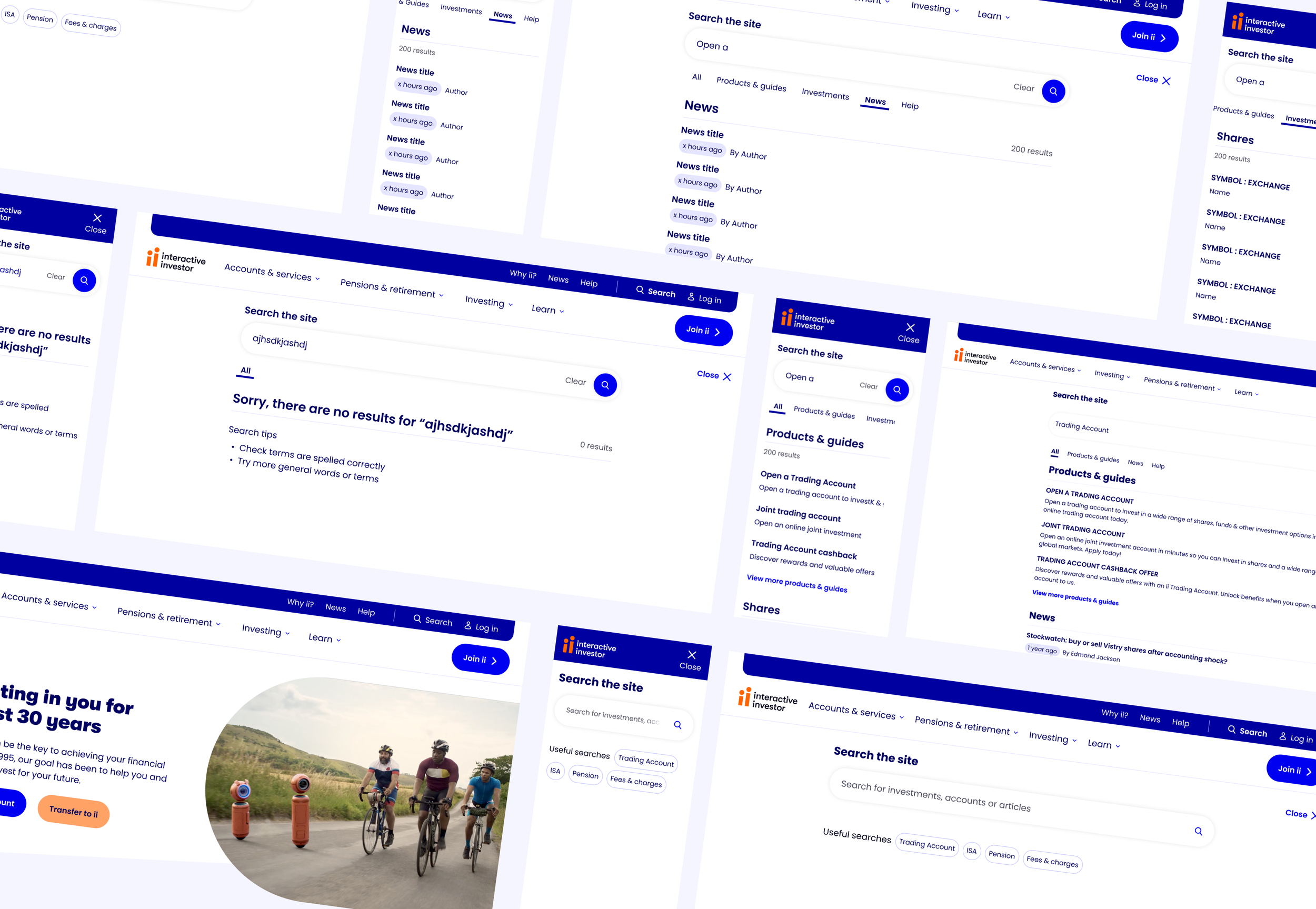
Designed and delivered a scalable global search experience aligned with user intent, industry standards, and content architecture.
Impact
Improved content discoverability, reduced user frustration, and enabled users to self-serve critical information.
Overview
The public website receives thousands of views a day, acting as the primary entry point for Investments (stock, shares and ETF) pages.
Challenge
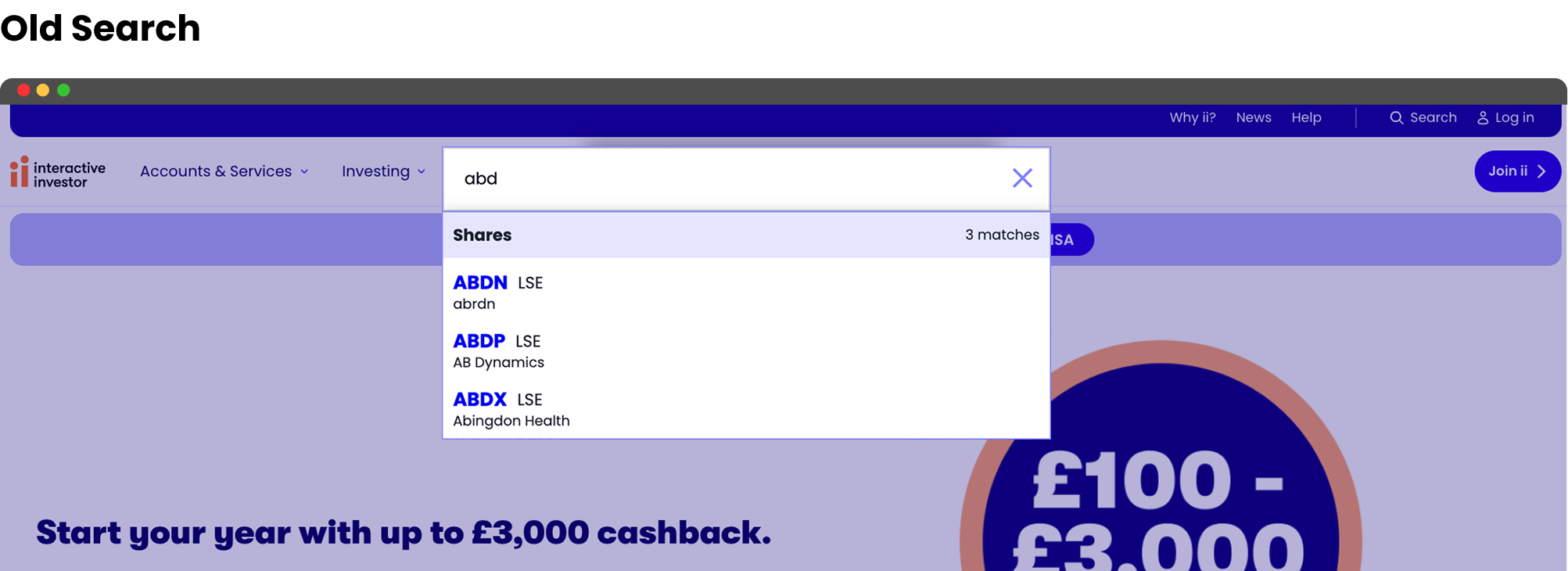
User Problem
Instead, they experienced
Dead ends
Irrelevant results
High effort to find basic information
Users expected the search to
Help them navigate the site
Answer key financial questions
Surface relevant products and content

Business Problem


Poor search → lost engagement + trust
Increased customer support costs
Reduced ability to surface key products/content
Constraint
This was initially low priority compared to revenue-driving features.
Discovery
Behavioural Insight
Users were already using search as a global navigation tool. Even though it wasn’t designed for that.
No support for natural language queries
Poor handling of partial or ambiguous inputs
No connection to content (articles, help, fees)
Inconsistent naming (SEO vs user language)


Approach
Lean, Outcome-Focused Delivery
Principles
Match industry-standard search expectations
Design for intent, not exact match
Enable self-service over support dependency
Ensure accessibility and clarity
We aligned with Product and Engineering to
Run a focused design sprint
Define a clear MVP scope
Prioritise impact over completeness
Solution
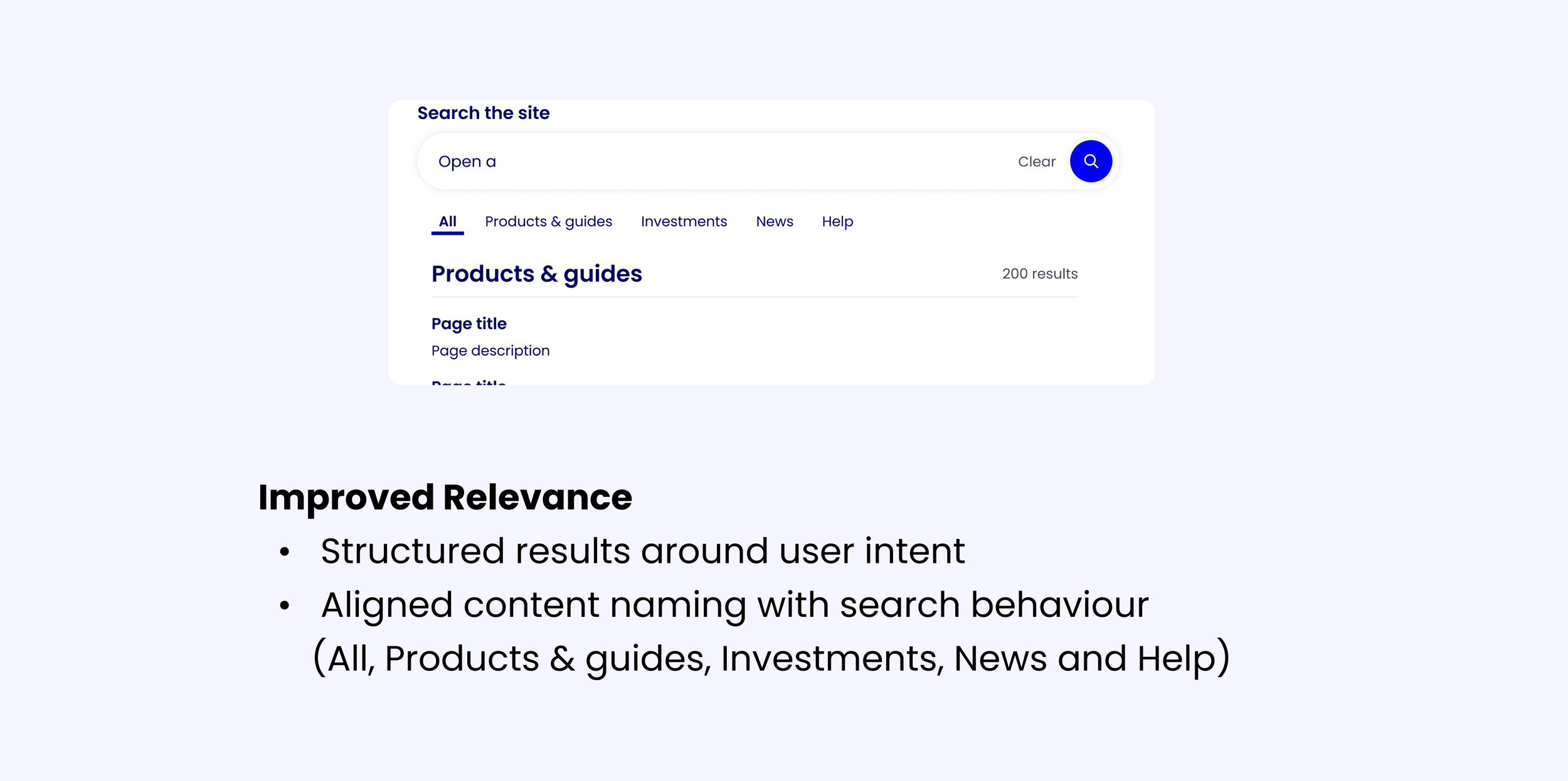
Validated
Ability to find key information
Clarity of results
Alignment with user expectations
Delivery & Iteration
Initial rollout monitored performance and engagement.

Iteration
Introduced AI-driven result ranking
Improved relevance for imperfect and intent-based queries
Business
Reduced dependency on support channels
Increased engagement with content
Established scalable search foundation
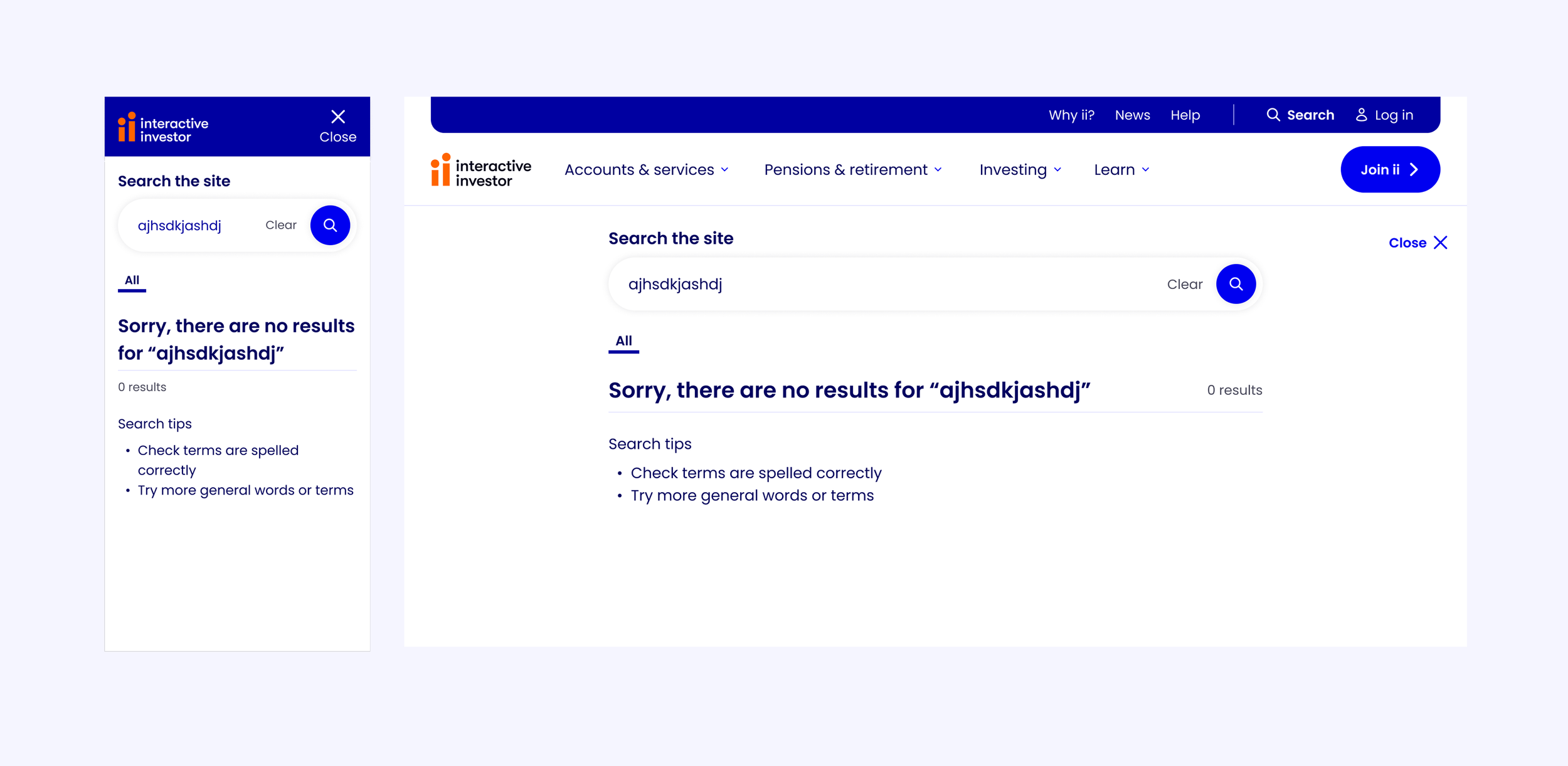
Learnings
Search is a core navigation system, not a feature
Designing for intent significantly improves usability
Behaviour change requires visibility and education
High-impact improvements can be delivered through lean execution
Reflection
This project transformed search from a limited tool into a core platform capability, better aligned with user needs and business goals.
It reinforced the importance of
Designing for real user behaviour
Balancing constraints with impact
Delivering measurable improvements at scale